
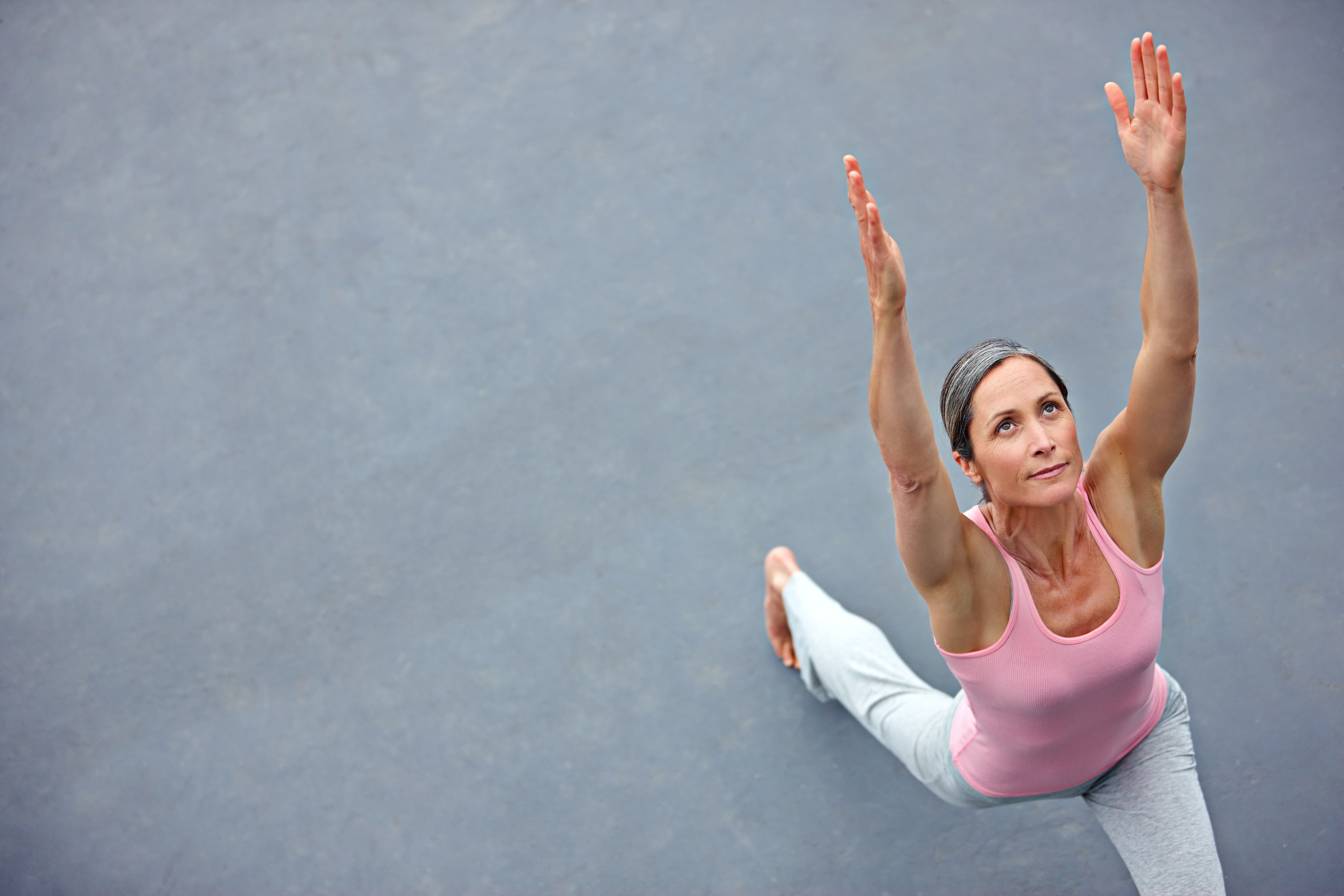
5 Pelvic Floor Stretches to Stop Leaks After 40
Are occasional leaks when you laugh, sneeze, or exercise becoming more of a problem? As women age, hormonal changes, muscle weakness, and tension in the pelvic area can make bladder control more difficult. “If you lose urine every time you cough, sneeze or even jump, it can really cause a problem with your quality of life,” shares board-certified ObGyn Henry Prince, MD.
The good news? Relief may be as simple as adding a few pelvic floor stretches to your daily routine.
Your pelvic floor muscles support your bladder, uterus, and bowel, and, like any other muscle group, they can weaken over time, contributing to incontinence, pelvic pain, or that constant feeling of urgency.
Luckily, many women can manage these issues by strengthening their pelvic floor. In this guide, we’ll cover why pelvic floor health is critical and share five gentle yet effective pelvic floor stretches designed specifically for premenopausal and menopausal women.
How to Strengthen Your Pelvic Floor in Your 40s and 50s
We use our pelvic muscles our entire life to control our bladder and support core strength and stability. As you age, these muscles can weaken, and your risk of pelvic weakness or pelvic floor dysfunction (PFD) increases. When estrogen dips through peri- and post-menopause, tissues in the vulva, vagina, urethra, and bladder change (often called genitourinary syndrome of menopause, or GSM), affecting 50-70% of postmenopausal women.
“Age and childbirth can relax the suspensory ligaments that support the bladder and the uterus,” Prince, who has been practicing for 40+ years, further explains.
The combination of thinner, more inflexible tissues and weakening muscles means that a balanced approach, mobility and strength, will yield better results.
Many women may jump straight to exercise, but if your pelvic floor is overactive, jumping straight into hard squeezing like Kegels can backfire. If it is underactive, you need to add strengthening to your daily routine.
Below, we’ll start with five gentle pelvic floor stretches for women over 40 (think hips, spine, and breath) to down-train tension, then show you how to layer coordination and strength for better bladder control over time.
That mix, paired with smart bladder habits, reflects what clinical guidelines call the first-line approach: conservative care, accessible treatment you can do easily with support from your healthcare professional.
Deep Breathing
Before the stretches, you should focus on your breathing. Why? Because your diaphragm and pelvic floor are teammates.
As you inhale, the diaphragm descends and the pelvic floor naturally lengthens; as you exhale, both gently recoil. There’s also emerging evidence that training the respiratory-abdominal-pelvic unit together can influence pelvic outcomes.
That is why a core part of pelvic rehab approaches includes retraining this collaborative mechanism.
Try This Diaphragmatic Breathing Exercise
Try this 60-second reset (breathing techniques to relax pelvic floor muscles):
- Lie on your back with knees bent, or sit supported.
- Place one hand on your lower ribs, one on your lower belly.
- Inhale through your nose: feel your ribs widen 360°, belly soften, and the pelvic floor “drop” or soften.
- Exhale gently through pursed lips: ribs come in, lower belly gathers, pelvic floor subtly lifts without gripping.
- Repeat for 6–8 slow breaths.
Use this breath between sets of your pelvic floor stretches and before any strengthening reps. It’s your anchor for movement without gripping.
The 5 Key Stretches (with modifications for pre-/menopausal women)
A quick note on evidence: clinical guidelines strongly endorse conservative care (Pelvic Floor Muscle Training, or PFMT and bladder training) for urinary symptoms; specific yoga-style or hip-focused stretches are less studied as stand-alone treatments.
Here, we use them as down-training tools—to reduce guarding and improve range so your coordination and strengthening land better. Just remember: Progress slowly, keeping breath easy. If any stretch increases sharp pain or heaviness, ease out and note it for your PT.
Pose #1: Child’s Pose (knees wide)
Posterior pelvic floor release (child’s pose variation for pelvic floor release).
- How: Kneel, big toes together, knees wide. Hips to heels, forehead on cushions. Inhale into ribs/back; exhale and melt.
- Dose: 3×30 seconds.
- Mods: Support under the hips or chest; stop if you feel excess knee pressure.
Example: How to do a child’s pose stretch.
Pose #2: Deep Supported Squat (Malasana)
Pelvic opening + ankle/hip mobility (deep squat pelvic floor stretch to reduce leaks).
- How: Hold a doorframe or stack blocks under your sit bones; keep chest lifted.
- Dose: 3×20–30 seconds with relaxed belly breathing.
- Mods: Heels on a rolled towel; hold a counter for balance.
Example: Learn the Garland Pose (Malasana) | Yoga.
Pose #3: Figure-4 (supine piriformis/glute)
Releases drivers of pelvic guarding.
- How: Cross ankle over opposite knee; draw legs toward you until a glute stretch.
- Dose: 2×30 seconds/side; breathe low and wide.
Example: How to do a Figure-4 Stretch.
Pose #4: Half-Kneeling Hip Flexor Stretch
Addresses anterior hip tightness that tilts the pelvis forward.
- How: One knee down, other foot forward. Tuck tail slightly, shift forward until you feel front-hip stretch.
- Dose: 2×30 seconds/side.
- Mods: Pad under knee; hold a chair for balance.
Example: Kneeling Hip Flexor Stretch.
Pose #5: Cat-Cow + Pelvic Tilts
Gentle spine/pelvis mobility.
- How: On hands/knees, inhale to soften belly and lift tail (cow); exhale to round gently (cat). Then 6–8 slow pelvic tilts lying on your back.
- Why: Spinal motion and pelvic tilting reduce protective gripping and improve awareness—useful before coordination/strength.
Example: Cat – Cow Stretch.
Putting It All Together: How Often, When & What To Expect
You don’t have to jump into a length, excruciating routine; you can take it slow and start small:
- Think micro-routine: Start with 5-10 minutes most days
- Pair your five stretches with 6-8 rounds of relaxed breathing, then add gentle coordination—for example, on exhale during a sit-to-stand, cue a light pelvic floor lift (“sip through a straw”), and fully relax on inhale.
- After 1-2 weeks, begin three sets of 8-12 sub-max contractions on exhale, focusing on quality, not force.
While there’s no guarantee you’ll see improvement, the evidence points to better outcomes in urinary incontinence, including fewer leaks, fewer pads, and higher quality-of-life scores over time.
Bottom line: aim for a daily routine of pelvic floor stretches for urinary leakage for 2-3 weeks, before increasing reps or intensity. Most women notice improvements within a month, with continued gains by 8-12 weeks—especially when practice is consistent and paired with smart habits.
Lifestyle & Pelvic Floor Care: The Bigger Picture
Change happens with small, everyday habits. Alongside mobility and PFMT, adding the below can make a noticeable difference:
- Gradually space out how often you void your bladder (e.g., from every 60 minutes to 75, then 90).
- If you catch the urge earlier, pause, and take 5-6 relaxed inhales, perform a few gentle pelvic floor “flicks,” and wait for the wave to pass before walking calmly to the bathroom.
- Constipation can increase pelvic tension — stay hydrated, hit your daily fiber intake goals, and consider keeping a footstool in your bathroom to reduce straining.
- Dryness and irritation from GSM can make pelvic work uncomfortable. Talk to your Squarecare provider about vaginal moisturizers or local estrogen to improve comfort and urinary symptoms.
The goal isn’t perfection; it’s fewer bladder “emergencies” and more confidence doing what you love.
When Should You See a Specialist?
Most midlife urinary issues respond well to exercise, stretching and lifestyle changes. However, if your symptoms persist, you may need to see a specialist, such as a pelvic floor physical therapist (PFPT).
Seek an evaluation if you have:
- Leaks or urgency that don’t improve after 6–8 weeks of consistent practice.
- Significant pelvic pain, painful penetration, or a constant clenched feeling.
- Marked heaviness/bulge sensations suggestive of prolapse.
- Recurrent UTIs or new bleeding.
- Post-surgical recovery needs or difficulty sensing a contraction.
How Can a Pelvic Floor Therapist Help?
If your floor is overactive, PFPTs can use biofeedback and manual techniques to down-train before strengthening. If it’s underactive, they’ll dial in dosage and progressions—evidence shows that structured, supervised PFMT outperforms vague, unsupervised attempts. Cochrane analyses repeatedly demonstrate clinically meaningful improvements in leakage episodes, pad tests, and self-reported symptoms with targeted training.
You deserve care that meets you where you are. If you’re unsure which bucket you fit, that’s your cue to book an assessment.
FAQs
Will stretches alone stop my leaks?
Stretches are a good starting point, as they encourage coordination and strengthening, but they may not be enough on their own. PFMT has strong evidence for improving stress, mixed, and urgency incontinence; pairing mobility with training and bladder habits yields the best odds.
How soon will I notice changes?
Some women report reduced urgency/tension within 2-3 weeks of consistent practice. Leakage can improve in 4-12 weeks.
Can adding kegels help?
Kegel exercises have grown in popularity as they’ve been shown to help with pelvic issues, especially urinary incontinence. However, research indicates that unsupervised kegels are less effective, so work with a specialist for the maximum benefit.
Can bladder training help urgency?
Yes. Data suggests bladder training can cure or improve overactive bladder compared with no treatment and may have fewer side effects than medication, though results vary. It’s commonly recommended as a first-line treatment.
Does menopause itself cause incontinence?
Menopause doesn’t doom you to leaks, but estrogen decline contributes to GSM—tissue changes associated with dryness, irritation, and urinary symptoms. Addressing GSM and doing targeted pelvic rehab is a powerful combo.
Pelvic Floor Care in Long Island
Strong pelvic health isn’t just about Kegels—it’s about balance, awareness, and consistency. Incorporating simple pelvic floor stretches can release tension, restore coordination, and make traditional strengthening work far more effective. Dr. Prince says, “The best thing to do is to try to catch these symptoms early, where physical therapy can be very helpful.”
Add mindful breathing and healthy bladder habits, and you create a routine that not only improves function but also supports overall confidence, posture, and energy. If leaks or urgency have been holding you back, request an appointment today so we can guide you to the right specialist or treatment and help you feel strong, flexible, and resilient again.